
Your Bones Don't Wait Until 65
BONE HEALTH
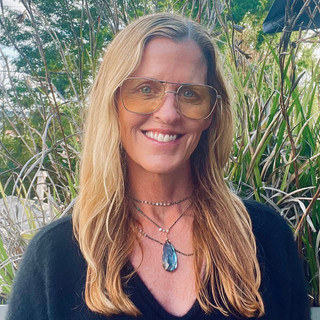
Lisa Arshawsky, MSN, WHNP-BC, CNM
Here's something most women never hear from their doctor. The fastest bone loss of a woman's entire life happens in the couple of years right before and right after her last period. And yet the guidelines that shape how clinicians practice still say a bone density scan (a DEXA) at 65, unless you already have risk factors.
That's roughly a 14 year gap between when bone loss speeds up and when most women actually get looked at. This issue walks through why that gap matters, what really drives fracture risk (hint: it's not just your bones), and what we do differently in our practice. Some of what we do goes beyond the official guidelines, and we'll be upfront about exactly where that line is.

A fracture later in life is not a small thing
About one in two women over 50 will break a bone because of osteoporosis at some point. Falls are the leading cause of injury death in adults 65 and older in the US, and roughly one in four older adults falls every year.
The hip fracture is the one we worry about most. A large meta-analysis in the Annals of Internal Medicine found that in the first three months after a hip fracture, a woman's risk of dying from any cause is about five to six times higher than a woman her age who didn't fracture. That excess risk narrows over time but doesn't fully go away, even years later.
And mortality is only part of the story. A lot of women who break a hip never get back to living independently. Spine fractures are sneakier, they're often silent, and show up as lost height, a forward curve in the upper back, and chronic pain. One fracture also makes the next one much more likely. So when we talk about bone health in your 40s and 50s, what we're really talking about is protecting the version of you at 75 and 85.
The bone loss window, and why estrogen is at the center of it
Bone isn't static. It's constantly being broken down by cells called osteoclasts and rebuilt by cells called osteoblasts. Estrogen is one of the main things keeping that process in balance. It puts the brakes on osteoclasts, shortens how long they live, and helps protect the bone building cells. When estrogen drops, breakdown starts outpacing rebuilding.
The best data we have on timing comes from SWAN (the Study of Women's Health Across the Nation), which followed a large, multiethnic group of women through the menopause transition. Bone loss started picking up about a year before the final menstrual period and stayed at its fastest for about two years after, before slowing down. Over the transition, women lost roughly 10% of the bone density in their spine and close to that at the hip.
A quick nuance, because it matters. In early perimenopause estrogen doesn't just steadily decline, it swings around and can even run high. The bone loss lines up with late perimenopause, when estradiol falls for real and FSH climbs. That's the window. And by 65, when routine screening starts, most of that loss has already happened.
Risk factors, and why it's not just about your bones
The classic risk factors are well established. Low body weight is a big one (a BMI under about 20, or under 127 pounds). So is a parent who broke a hip, smoking, drinking three or more drinks a day, steroid use, and conditions like rheumatoid arthritis, celiac disease, or an overactive thyroid. Going through menopause early, before 45, means more years without estrogen's protection.
Then there's the lifestyle side. A sedentary life gives bone no reason to stay strong, because bone responds to load. Poor nutrition, especially not enough protein, calcium, or vitamin D, takes away the raw materials. And carrying extra weight doesn't protect you the way people assume, it changes which bones are at risk, and fracture risk in women with type 2 diabetes is higher even when their bone density looks normal.
Here's the part that gets left out of most conversations. A fracture almost always starts with a fall, and whether you fall, and how you land, depends on your muscle. We lose muscle with age, and we don't lose it evenly. The fast twitch (type II) fibers, the ones that fire when you trip and need to catch yourself, shrink faster than the slow twitch ones. Power, which is strength plus speed, drops off faster than strength alone. So a woman can still carry her groceries just fine and still not be able to recover from a stumble on a curb.
There's also emerging evidence that estrogen plays a role in muscle quality and power, not just bone, which is one more reason the menopause transition is a muscle story too. Fragility is bone and muscle together. Treating it as a bone-only problem misses half of it.
The risk tools, and what they miss
The US Preventive Services Task Force updated its recommendation in January 2025. It still says to screen all women 65 and older with a DEXA. For postmenopausal women under 65, it recommends first using a risk assessment tool, then doing a DEXA if risk is elevated.
What surprises a lot of people is that there's no single required tool. The Task Force lists several, including FRAX, OST, ORAI, OSIRIS, and SCORE, and leaves the choice to the clinician. It also doesn't set a cutoff for what counts as "elevated." In practice most clinicians use FRAX, which estimates your 10 year chance of a major fracture, or OST, which is just your weight in kilograms minus your age, times 0.2. When researchers compared them, none clearly outperformed the others at finding women with low bone density, and all of them were only modestly accurate.
Here's our issue with them. These tools are heavily driven by age. Take a 52 year old who's a healthy weight, doesn't smoke, and has never broken a bone. Run her through FRAX and she'll almost always come out low risk, so no scan. But she's sitting right in the middle of the fastest bone loss of her life. None of these tools ask where you are in the transition, whether your periods have stopped, or what your estrogen is doing. FRAX doesn't even ask about age at menopause unless the clinician enters early menopause under "secondary osteoporosis." That's a real blind spot for women in perimenopause and early postmenopause.
Prevention starts in perimenopause, not at 65
Everything that protects bone works better when you start before the steep part of the loss. You're defending bone you already have, instead of trying to rebuild bone that's gone. That's why we push prevention in the 40s.
Bone responds to load, so the most important tool here is lifting heavy things. We mean compound movements (squats, deadlifts, presses, rows) that load the hips and spine, which are exactly the places we worry about fractures. The LIFTMOR trial showed that postmenopausal women with low bone mass who did supervised high intensity resistance and impact training twice a week for eight months improved bone density at the spine and hip. Walking alone, as good as it is for the heart, doesn't give bone enough of a signal.
Because of the fast twitch fiber loss we talked about, we also want some power and impact work, things like jumps, step-ups done with speed, or quick sit-to-stands, scaled to where you are. Add balance training on top of that. A Cochrane review found that exercise programs, especially ones that include balance work, cut the rate of falls by around 23%. Bone, muscle, and balance all feed into whether a fall turns into a fracture.
Nutrition is the other half. Bone needs building blocks, so we look at protein, calcium from food, vitamin D, and overall energy intake, since chronic under-eating works against bone. We'll get to protein in more detail below.
Hormone therapy belongs in this conversation
If estrogen loss drives the bone loss, it makes sense that replacing estrogen slows it. And it does. Hormone therapy is FDA approved for the prevention of postmenopausal osteoporosis. In the Women's Health Initiative, women on estrogen plus progestin had about a third fewer hip fractures than women on placebo. That's a fracture reduction, not just a better number on a scan.
The Menopause Society's 2022 position statement says that for women under 60, or within 10 years of their last period, with no contraindications, the benefits of hormone therapy generally outweigh the risks for treating symptoms and for preventing bone loss in women at elevated risk. Timing matters a lot here, which is one more reason this conversation should happen in perimenopause and not years later.
In our practice, every woman gets counseled on hormone therapy, whether or not she has hot flashes. That doesn't mean every woman should be on it. Some aren't candidates, some choose not to, and that's a fine decision when it's an informed one. But she should hear that bone protection is one of the real benefits, so she can weigh it for herself. One thing worth knowing is that the protection fades once you stop, and bone loss picks back up, so it's a longer term conversation, not a one time decision.
Supplements are tools, not a substitute
Supplements can fill gaps, but none of them replaces lifting, eating enough, or estrogen when it's appropriate. We'd rather be straight with you about where the evidence is strong and where it's still early.
Calcium. Women over 50 need about 1,200 mg a day total, and we want most of that from food. If you're falling short, a supplement fills the gap, but we keep doses to around 500 mg at a time for better absorption and don't stack more than you need. More isn't better here.
Vitamin D. Correcting a deficiency matters, since you can't absorb calcium well without it. But in the large VITAL trial, giving vitamin D to generally healthy adults who weren't deficient didn't reduce fractures. So we test, and we dose to the level, not by habit.
Creatine. It's best known for supporting muscle when paired with strength training, and that's where it earns its place for us, given the muscle side of fragility. A two year trial in postmenopausal women didn't find a change in bone density, though it did show some benefit to the hip's structural strength. Promising, not proven for bone.
Collagen peptides. One 12 month randomized trial found specific collagen peptides improved bone density at the spine and hip in postmenopausal women with low bone density. It's one trial, and it was industry funded, so we call this encouraging but early.
Vitamin K2 and magnesium. Both play roles in bone metabolism and both have supportive observational data, but trial results are mixed. Worth correcting if you're low, less clear as a stand alone strategy.
The bottom line is that the supplement plan should be built on your labs and your diet, not a one size fits all bottle.
Why we get a baseline DEXA early (and yes, this goes beyond the guidelines)
We want to be clear here. Routine DEXA scans for women under 65 without risk factors are not recommended by the USPSTF or the Menopause Society. What follows is our clinical approach, not the official guideline. |
We use the DEXA as a baseline, not a diagnosis. If we know where your bone density sits as you enter the transition, we can see how fast you're losing and step in earlier if you're losing faster than we'd like. Without a baseline, the first scan at 65 tells us where you landed but nothing about how you got there. For a woman who's menopausal and not on hormone therapy, that baseline also gives us a concrete piece of information to bring into the hormone therapy conversation.
We pair it with a baseline body composition scan, which measures lean muscle mass, including in the arms and legs. Since fragility is bone and muscle together, we want to track both. It's the same idea as the bone scan, knowing your starting point so we can tell whether your strength training and nutrition are actually working.
A DEXA is quick, painless, and the radiation dose is very low, a small fraction of a chest x-ray. The real tradeoff is that insurance often won't cover it before 65 without a qualifying risk factor.
The labs that tell us about bone indirectly
No blood test diagnoses osteoporosis. But labs can catch things that quietly pull calcium out of bone or keep you from building it, and those are worth finding early. These are the ones we look at.
Lab | What it tells us about bone |
CMP (comprehensive metabolic panel) | Calcium, albumin, kidney function, and alkaline phosphatase, which can rise when bone turnover is high |
25-hydroxy vitamin D | Whether you have enough vitamin D to absorb calcium |
PTH (parathyroid hormone) | An overactive parathyroid pulls calcium from bone |
TSH | Too much thyroid hormone, whether from your thyroid or your dose, speeds bone loss |
Phosphorus and magnesium | Both are needed for bone mineral and for vitamin D to work |
CBC | Screens for anemia and other clues to an underlying condition |
Celiac screen, when indicated | Undiagnosed celiac disease blocks calcium and vitamin D absorption |
Bone turnover markers (CTX, P1NP), in select cases | How fast bone is being broken down and rebuilt; most useful for tracking treatment, not screening |
If something comes back off, we treat the cause, which protects bone in a way no supplement can.
Don't skip the protein
Protein is the piece most women underestimate. It's the raw material for muscle, and it makes up about half of bone's volume, the collagen framework that minerals are laid onto.
The RDA of 0.8 grams per kilogram of body weight is a minimum to avoid deficiency, not a target for midlife women trying to hold on to muscle and bone. The PROT-AGE expert group recommends 1.0 to 1.2 g/kg a day for older adults, and more for those who are active or managing a chronic illness. For a 150 pound woman, that works out to roughly 70 to 80 grams a day. We aim to spread it across meals, rather than loading it all at dinner.
You may have heard that a high protein diet leaches calcium from your bones. That idea hasn't held up. A meta-analysis commissioned by the National Osteoporosis Foundation found that higher protein intake didn't harm bone, and was linked to a small benefit at the spine, especially when calcium intake was adequate.
Widening the lens
Guidelines exist for good reasons. They're built from large population studies, and they protect patients from overtesting and overtreatment. But they're also slow to change, they're tied to what the evidence can prove at a population level, and the 65 cutoff happens to line up neatly with when Medicare starts paying for the scan. None of that is a criticism of the clinicians following them. Most of us were trained to practice by the guideline, and very few of us got real training in menopause.
What we're asking our colleagues to consider is widening the lens on when we test and when we treat. A woman in late perimenopause who isn't on hormone therapy is in the fastest bone loss of her life, whether or not a risk calculator flags her. She deserves a conversation about her bones, her muscle, and her options right then, not a reminder at 65.
And if you're the woman reading this, you don't have to wait to be asked. Bring it up. Ask what your bone health plan is, ask whether hormone therapy makes sense for you, and ask what you should be doing in the gym and on your plate. The best time to protect your bones is before you've lost them.
SOURCES
US Preventive Services Task Force; Nicholson WK, et al. Screening for osteoporosis to prevent fractures. JAMA. 2025. PMID 39808425.
Kahwati LC, et al. Screening for osteoporosis to prevent fractures: updated evidence report and systematic review for the USPSTF. JAMA. 2025.
LeBoff MS, et al. The clinician's guide to prevention and treatment of osteoporosis. Osteoporos Int. 2022;33(10):2049-2102.
Centers for Disease Control and Prevention. Older adult falls data.
Haentjens P, et al. Meta-analysis: excess mortality after hip fracture among older women and men. Ann Intern Med. 2010;152(6):380-390.
Greendale GA, et al. Bone mineral density loss in relation to the final menstrual period in a multiethnic cohort (SWAN). J Bone Miner Res. 2012;27(1):111-118.
Nilwik R, et al. The decline in skeletal muscle mass with aging is mainly attributed to a reduction in type II muscle fiber size. Exp Gerontol. 2013;48(5):492-498.
Reid KF, Fielding RA. Skeletal muscle power: a critical determinant of physical functioning in older adults. Exerc Sport Sci Rev. 2012;40(1):4-12.
Ronkainen PH, et al. Postmenopausal hormone replacement therapy modifies skeletal muscle composition and function: a study with monozygotic twin pairs. J Appl Physiol. 2009;107(1):25-33.
Watson SL, et al. High-intensity resistance and impact training improves bone mineral density and physical function in postmenopausal women with osteopenia and osteoporosis: the LIFTMOR randomized controlled trial. J Bone Miner Res. 2018;33(2):211-220.
Sherrington C, et al. Exercise for preventing falls in older people living in the community. Cochrane Database Syst Rev. 2019.
Cauley JA, et al. Effects of estrogen plus progestin on risk of fracture and bone mineral density: the Women's Health Initiative randomized trial. JAMA. 2003;290(13):1729-1738.
The 2022 hormone therapy position statement of The North American Menopause Society. Menopause. 2022;29(7):767-794.
Management of osteoporosis in postmenopausal women: the 2021 position statement of The North American Menopause Society. Menopause. 2021;28(9):973-997.
LeBoff MS, et al. Supplemental vitamin D and incident fractures in midlife and older adults. N Engl J Med. 2022;387(4):299-309.
Chilibeck PD, et al. Effects of creatine and resistance training on bone health in postmenopausal women. Med Sci Sports Exerc. 2023;55(10):1750-1760.
König D, et al. Specific collagen peptides improve bone mineral density and bone markers in postmenopausal women: a randomized controlled study. Nutrients. 2018;10(1):97.
Bauer J, et al. Evidence-based recommendations for optimal dietary protein intake in older people: PROT-AGE Study Group. J Am Med Dir Assoc. 2013;14(8):542-559.
Shams-White MM, et al. Dietary protein and bone health: a systematic review and meta-analysis from the National Osteoporosis Foundation. Am J Clin Nutr. 2017;105(6):1528-1543.
Los Angeles, California | yourmenopauseconcierge.com
This newsletter is for education only and isn't a substitute for individualized medical advice.

Comments